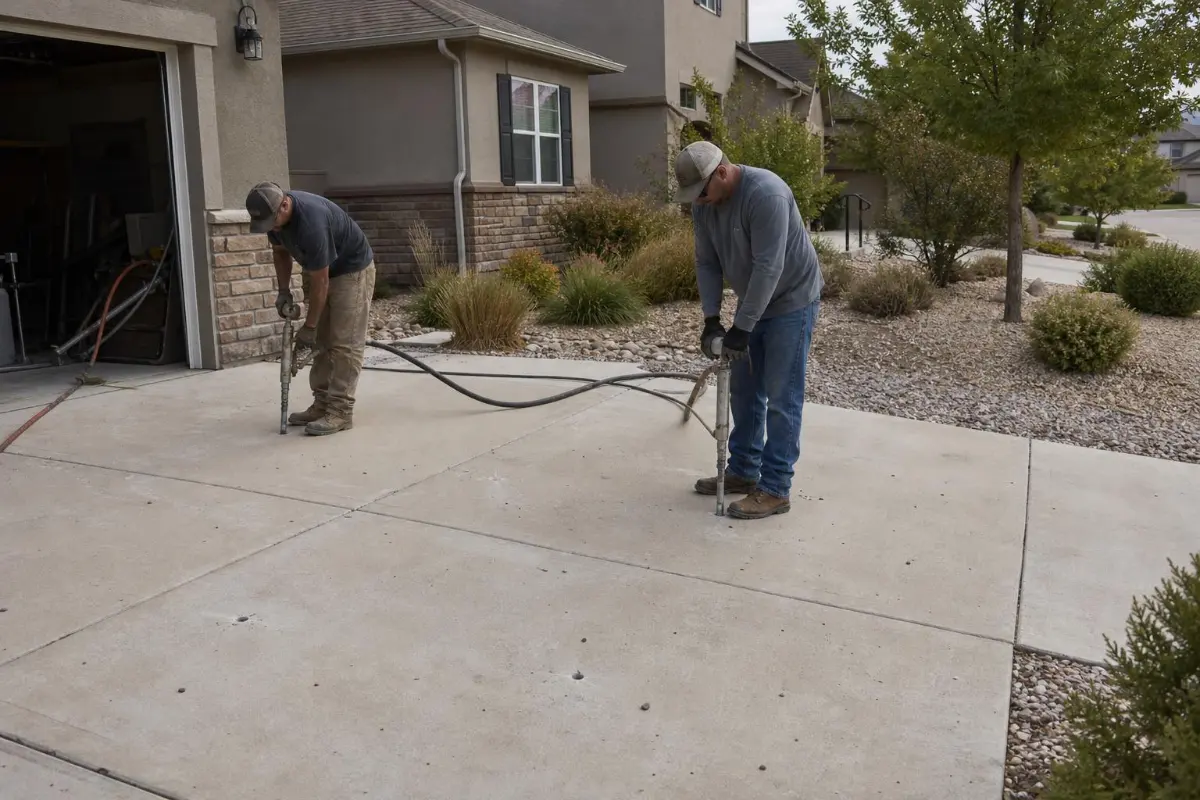
A sunken slab is easy to spot: a front walk that tips toward the door, a driveway panel that drops below the garage floor, a patio that holds a puddle against the house, a step that has pulled away from the stoop. Besides being a tripping hazard, a slab that slopes toward the house sends water straight to the foundation, which is the last place you want it in Colorado Springs.
Colorado Springs Foundation Repair Help is an independent referral service, not a foundation repair company. A request through this site goes to an independent contractor who serves Colorado Springs and does concrete leveling. The contractor looks at the slab, explains why it moved and whether lifting will work, and gives you a price before any work begins. The referral is free. Callbacks and on-site availability vary.
Why Slabs Sink or Lift Here
- Settled backfill. The soil dug out and pushed back around a new foundation is looser than undisturbed ground, and it settles. CGS's landscaping booklet tells homeowners to tamp settled backfill next to the house and add soil to keep the slope away from the walls. Walks, stoops and patios poured over that backfill often settle with it.
- Water. Downspouts that empty onto a walk, sprinklers that soak the edge of a patio and low spots that hold water all soften the soil under concrete.
- Swelling clay. The Colorado Geological Survey says expansive soil can swell 10 percent or more when wet. Swelling can push slabs up and crack them, which is the opposite of sinking and needs a different fix.
- Garage slabs. CGS's guide to building on swelling soils says garage and basement slabs are often built to float, separate from the walls, so some movement is expected.
Mudjacking vs Polyurethane Foam
Both methods lift a sunken slab from below instead of tearing it out.
- Mudjacking, or slab jacking, pumps a cement-based slurry through holes drilled in the slab. The material fills the gap underneath and raises the concrete.
- Polyurethane foam leveling, often called polyjacking, injects an expanding foam through smaller holes. The foam is much lighter than slurry.
Which one fits depends on the slab, the soil, the size of the void and the budget. Ask the contractor why they recommend one over the other, how the holes will be patched, and what they will do about the water that caused the settling.
When Leveling Is Not the Answer
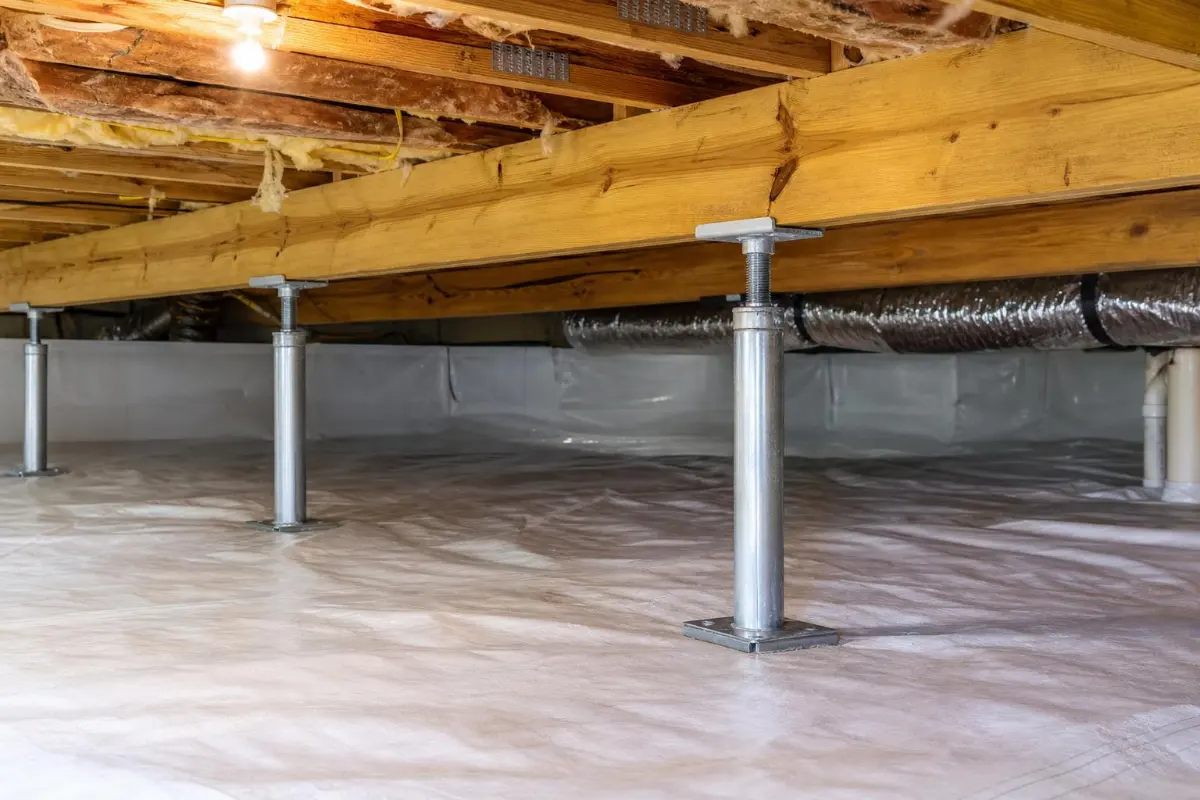
Lifting works on a slab that has sunk but is still in decent shape. It does not lower a slab that heaved up from swelling clay, and it will not save concrete that is broken into many pieces. In those cases, replacement, grinding or drainage changes may make more sense. If the concrete that sank is the house foundation itself rather than flatwork, that is a structural question; see Foundation Piering and Underpinning.
What Concrete Leveling Costs
The contractor sets the price. These figures are national guides:
- Mudjacking: $3 to $6 per square foot; polyurethane foam: $5 to $25 per square foot; most people pay about $830, with a typical total of $500 to $1,800 (HomeGuide; the page does not date its data).
- Slabjacking: $500 to $1,300 (HomeAdvisor, labeled 2025).
- Mudjacking or slab jacking: $500 to $1,900 (Fixr, updated January 27, 2026).
Raising the foundation of a house is a different, larger job. HomeAdvisor's Colorado Springs page for raising a concrete foundation (the page does not date its data) shows an average of $4,856, most jobs $2,900 to $7,464. The size of the slab, how far it has to come up, how many holes are needed, access and the material all move the price.
Permits
PPRBD's list of work exempt from permits includes private sidewalks, driveways and platforms on grade, and its homeowner permit page says concrete flat work generally needs no permit. Retaining walls over 4 feet do need one. If leveling turns into foundation work, ask the contractor about permits.
Keep It From Happening Again
After a slab is lifted, keep water off it and away from the house. CGS recommends that the ground fall 12 inches in the first 10 feet from the foundation, that downspouts discharge at least 5 feet out and that sprinklers not spray within 5 feet of the foundation. Sealing the joint where a slab meets the house helps keep water from running down along the wall.