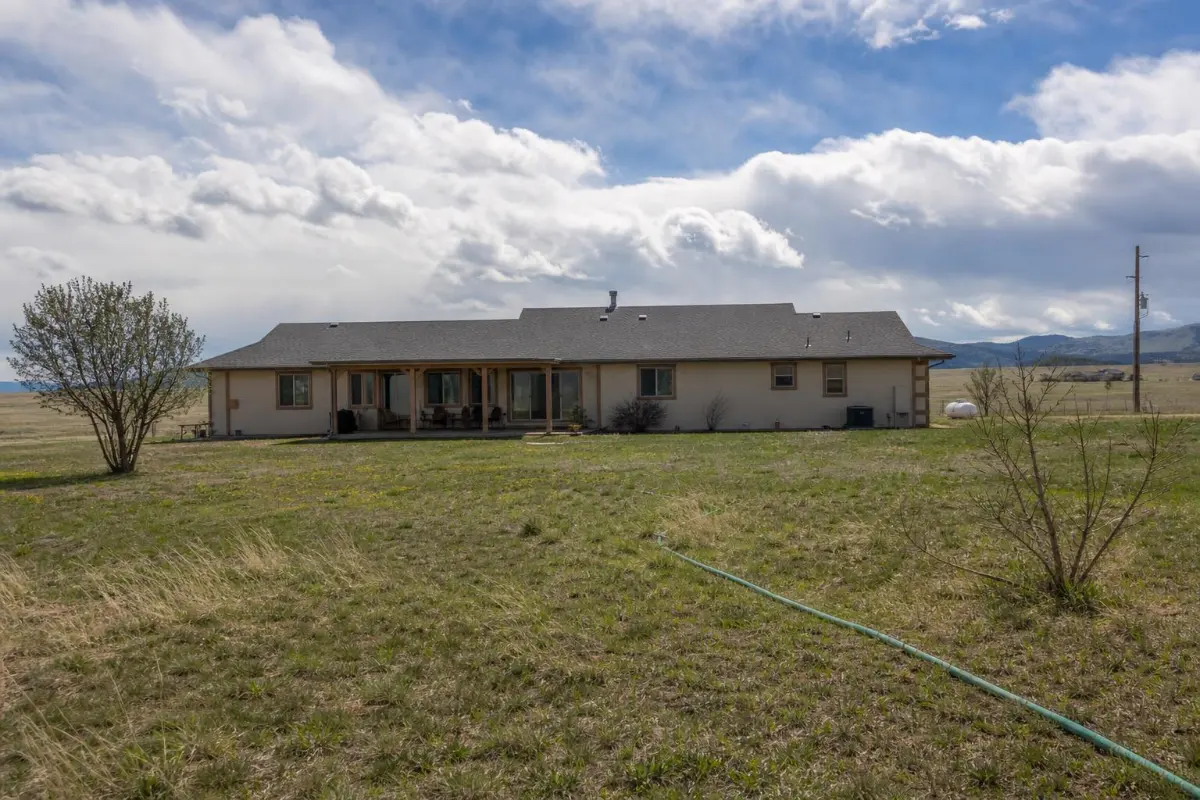
Unincorporated El Paso County, along US 24
Foundation Repair in Falcon, CO
Sump pump running after every storm, or a basement that stays damp? Call or send a request to be connected with an independent foundation repair contractor who serves Falcon.
Unincorporated El Paso County, along US 24
Sump pump running after every storm, or a basement that stays damp? Call or send a request to be connected with an independent foundation repair contractor who serves Falcon.
Falcon lies along US 24 about 14 miles northeast of Colorado Springs, at roughly 6,831 feet, on sandy grassland with the pines of Black Forest to the north. If your sump pump runs constantly, your basement is damp after rain or a slab has started to crack, call or send a short request. Colorado Springs Foundation Repair Help is an independent referral service, not a foundation repair company. It connects you with an independent third-party foundation repair contractor serving Falcon, and that business sets its own rates, scheduling, warranty and terms. You pay nothing for the referral, and coverage is checked by address. Callbacks and on-site availability vary.
Falcon began as a railroad stop in the 1880s, but most of what stands today is far newer. Home building took off in the early 1990s, residents voted against incorporating in 2007, and the area remains part of unincorporated El Paso County with mail through the Peyton post office. The Census Bureau's Falcon urban area counts about 23,007 people and 7,559 housing units, with a median owner-occupied home value of $552,900 (Census Reporter). Meridian Ranch alone has about 3,800 homes built since 2000 and plans for 5,000 (Meridian Ranch newsletter), and the Woodmen Hills metro district was organized in 1995 (welcome packet).
Falcon's ground is sandier than much of the region. The Colorado Geological Survey's Falcon NW quadrangle map describes the near-surface bedrock as the Dawson Formation, "chiefly of arkosic sandstone" and much of it weakly cemented, and says "Sand is conspicuously abundant," with sandy stream and windblown deposits blanketing nearly half the map. The windblown sand lies thickest on the east sides of valleys because of the prevailing northwesterly winds. On the neighboring Falcon quadrangle, much of the surface is likewise covered by young deposits over Denver Basin bedrock.
Groundwater is the local story. The Falcon Highlands Metropolitan District explains on its underdrain page that the soils are sand sitting on a sandstone shelf where surface water collects, and that "This leads to high groundwater throughout Falcon." Borings taken before Falcon Highlands was built showed high groundwater, so the geotechnical firm recommended an underdrain system: perforated main lines under the roads, service lines to each home and French drains around the foundations. The district adds that "It is typical to experience groundwater intrusion into the sump pit of a residence after rain events." In December 2023, KRDO reported residents' worries that the underdrain there might be clogged or crushed, leaving individual sump pumps to do the work.
That is one neighborhood's system, not a rule for every street. Still, if you live in Falcon, it helps to know whether your subdivision has an underdrain, who maintains it and where your own sump pump discharges. Tell the contractor all three.
Falcon sits at the head of several drainages. El Paso County lists drainage basin planning studies for the Falcon basin (2013), Haegler Ranch (2013) and Sand Creek (1996), among others. Summer storms can overwhelm low ground quickly: NWS Pueblo's May 2015 storm data records flash flooding north-northwest of Falcon on May 7 and south-southwest of Falcon on May 9. Water that pools against a foundation finds its way into window wells and sump pits.
The state survey's landscaping guide for swelling soil suggests a fall of about 12 inches over the first 10 feet from the house, downspouts that empty at least 5 feet out and no sprinkler spray within 5 feet of the walls. It also says to tamp backfill that has settled and add soil to keep the slope. On a newer lot, check that the strip along the foundation has not sunk into a trough that holds water.
Because Falcon is unincorporated, building permits come from the Pikes Peak Regional Building Department. PPRBD's residential plan review guidelines say new structures need a soils report and an engineered foundation design by the first inspection. If you can get your home's soils report from the builder or your records, it tells a contractor or engineer a lot about your lot. For repairs, PPRBD's disaster page says water damage generally does not need a permit unless there is structural or foundation damage.
Requests from Falcon often involve sump pumps that run after every storm, damp or wet basements, cracked basement slabs, settling patios and walks, and regrading or drainage fixes in Meridian Ranch, Woodmen Hills, Paint Brush Hills, Falcon Highlands and the surrounding acreage.
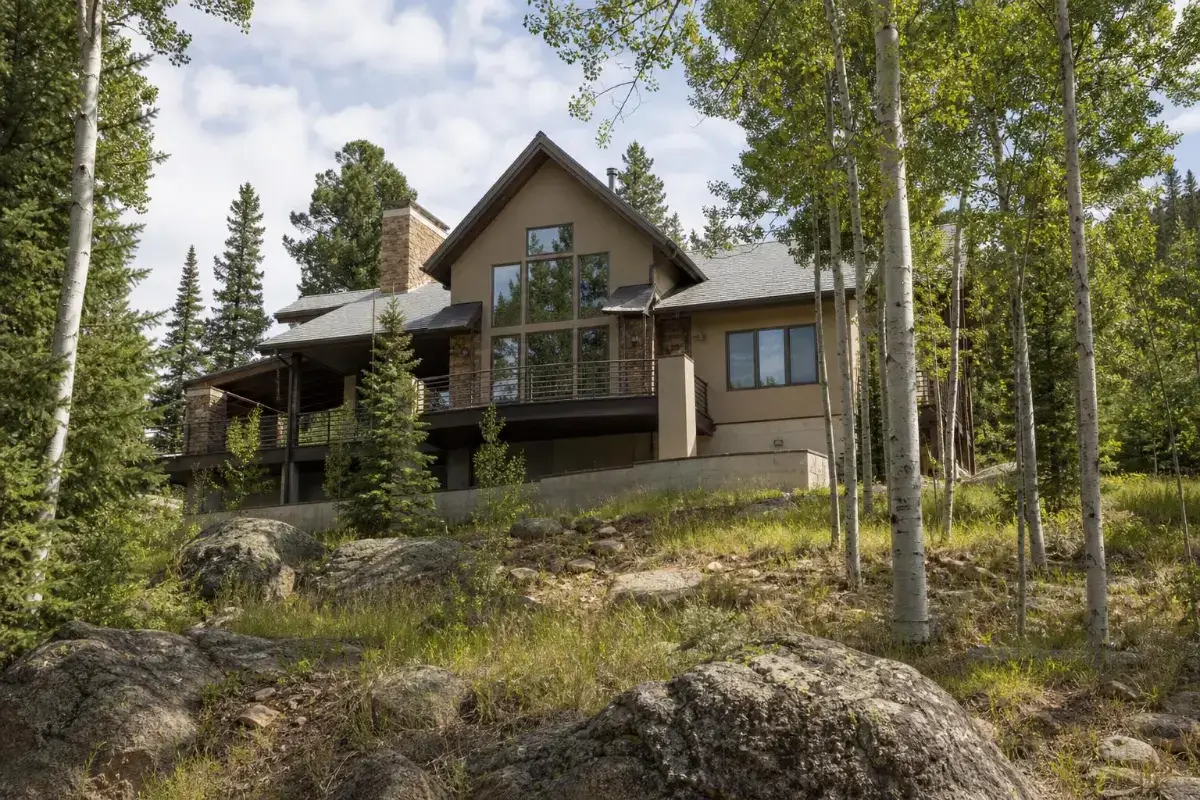
No charge to be connected with an independent foundation repair contractor who serves Falcon.
Mention your sump pump, any subdivision underdrain and where water collects in your yard.
If you have your home's soils report, share it with the contractor.
The Falcon Highlands Metropolitan District says high groundwater is found throughout Falcon and that groundwater entering sump pits after rain is typical in its neighborhood. A contractor can check whether the pump, its discharge and the drainage around the house are working as they should.
The Pikes Peak Regional Building Department, since Falcon is in unincorporated El Paso County. PPRBD says water damage generally needs no permit unless there is structural or foundation damage.
Colorado Geological Survey maps describe abundant sand and weakly cemented Dawson sandstone, with windblown sand covering much of the area. Conditions vary from lot to lot, so a soils report or engineer is the way to know what is under a particular house.
Yes, where the contractor's coverage reaches. Coverage is confirmed by address, and the referral is free.
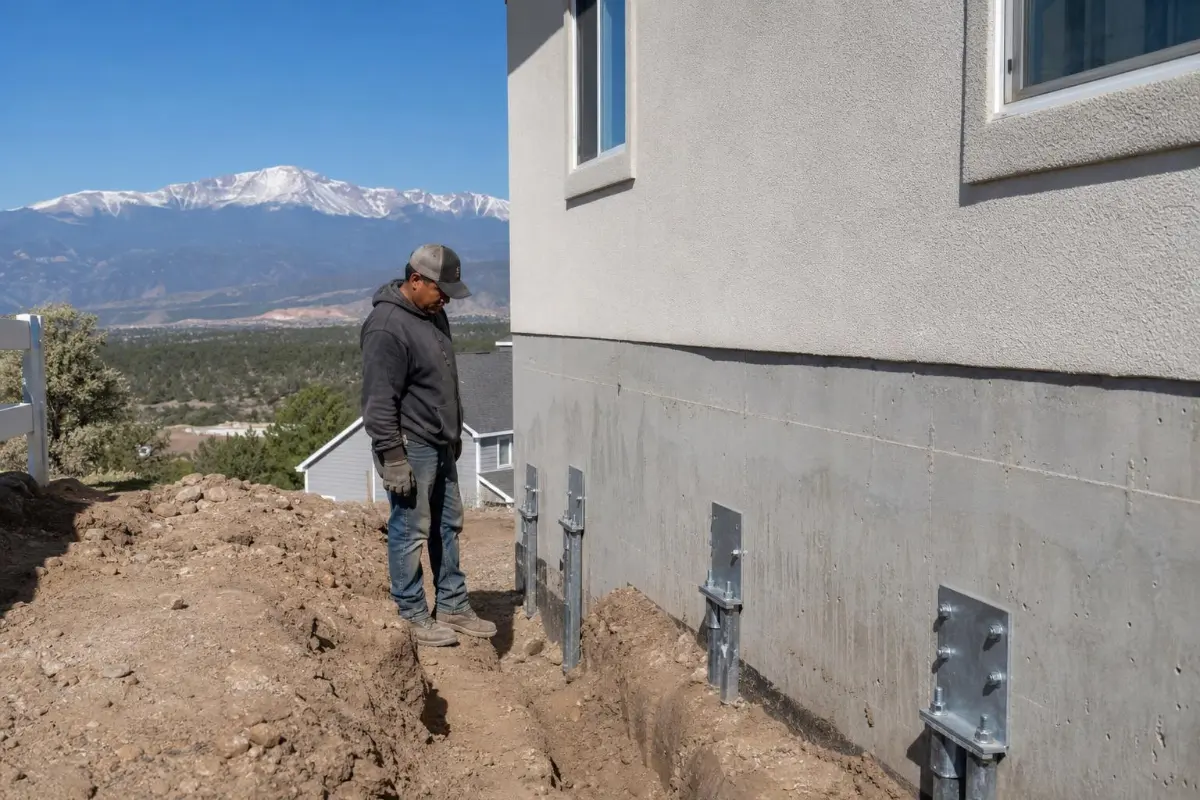
Falcon homeowners: call or send a request to be connected with an independent foundation repair contractor.
Free — no obligations